A free LRTimelapse alternative
Deflicker and steady white balance for timelapse sequences. Built for my own work, free and open source, and designed to fit around whatever editor you already use.
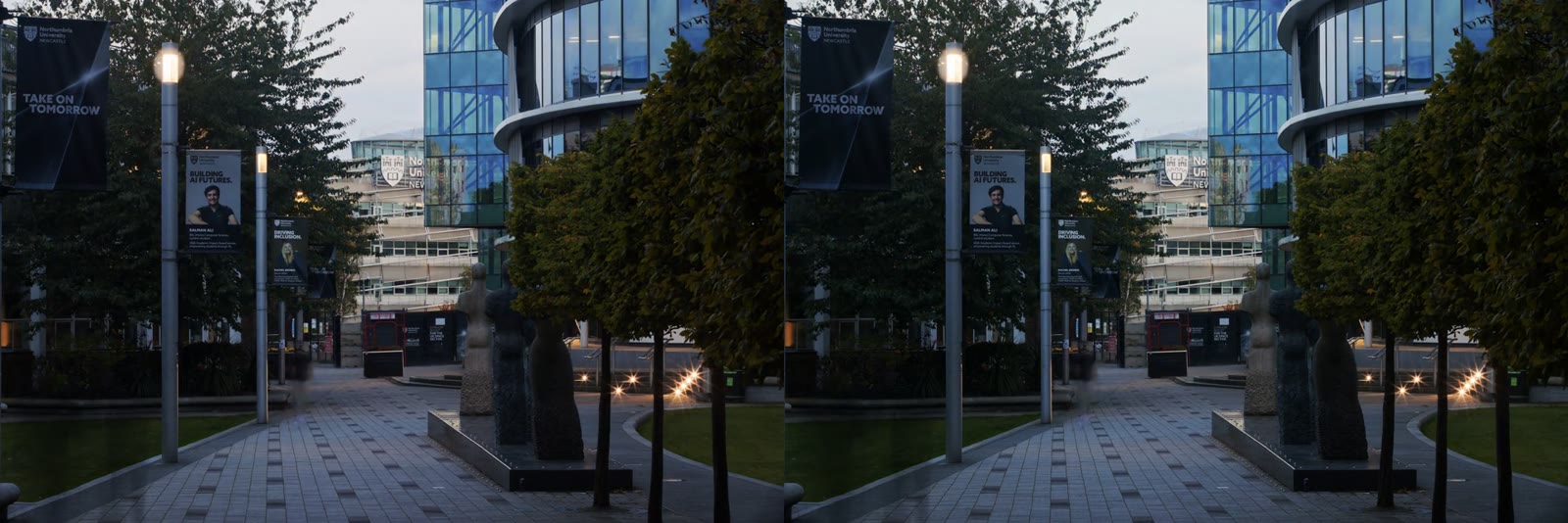 BeforeAfter
Timelapse sequences flicker. Auto white balance wanders, the aperture closes a fraction differently between frames, you turn an ND filter mid-shoot and the exposure steps. Played back at 24 frames a second it strobes, and no amount of grading fixes it.
LRTimelapse worked all of this out first and is still the reference for it - keyframing, holy grail ramping, visual deflicker. This tool learned from the problems it documents, and is better for them existing. It is paid software built around Lightroom, which is simply the wrong shape for some of us, me included, since I do not use Lightroom.
So I wrote my own. Free, MIT licensed, and editor-agnostic. No code was taken from anything that came before - the maths has been published since 1979 and the rest is mine.
The hard part is measuring
Correcting flicker is arithmetic. Working out what is flicker and what is the scene genuinely changing is the whole problem. If done wrong: a crowd crossing the frame reads as the shot getting darker, a cloud moving off the sun reads as a jump, and the correction makes things worse than it found them.
So most of the work happens before any correction is applied.
What it takes into account
- Brightness is measured only on the parts of the scene that hold still, so people, cars and light trails crossing the frame are left out of the comparison
- Each frame is measured region by region. Real flicker shifts the whole picture by the same amount, so a sky doing its own thing gets outvoted by the rest of the frame
- Blown highlights and pure black are excluded, because neither can tell you anything about exposure
- ND filter turns are not recorded in the file, so the exposure steps you made yourself are found from the pictures and blended into a ramp rather than corrected away
- Every RAW is read with identical settings, so the measurement cannot introduce flicker of its own
- The curve is fitted by local regression across each frame’s neighbours, so the slow change in the light is kept and only the jitter goes - and one odd frame, a car headlight say, does not drag the frames around it
- The correction reaches the encoder at 16-bit, so it is never rounded to 8 on the way to the video
And the practical bits
- Checks a folder before touching anything: missing frames, mixed RAW and JPEG, two cameras, black or blown frames
- Keyframe blending, so the grade can change across a sequence without jumping
- Writes H.264, 10-bit H.265 or ProRes
- Original photos are never modified, edit files are backed up before the first change, and an interrupted run can simply be run again
Does it work
Measured rather than claimed. On the sequence above - 229 frames shot into darkness with an ND filter being turned and ISO changes along the way - the original has 33 frame-to-frame jumps of more than a tenth of a stop. The corrected version has none.
As an outside check it has been run against the 16 clips in a published deflickering research dataset. Between them they go from 138 sudden jumps to 2, and none gets noticeably worse. The method and the numbers are in the repository so you can rerun them.
It is still early. It has been tested properly on one real sequence of my own plus that dataset, and I would rather say that than imply more.
Why a photographer wrote it
Every tool on this site exists because a job needed it. The deflicker came out of my own sequences strobing, the benchmark came out of not trusting my own eyes, and the editor support came out of using RapidRAW rather than Lightroom.
That is also the honest argument for hiring me: the person shooting your event is the person who writes the processing tools, and knows exactly what happens to an image between the sensor and the gallery.
Standing on shoulders
LRTimelapse, and the people who wrote the white balance smoothing scripts for darktable before that, solved these problems when nobody else was looking at them. Everything here is written from scratch, but the problems it knows to solve are the ones they described first. Full credits are in the repository.
Get it
Free, MIT licensed, and on GitHub. It is early software - tested properly on one sequence of my own plus a published research dataset - so awkward footage and bug reports are both genuinely useful.
View on GitHub